On Tuesday, October 20, 2026, a federal district judge sentenced Zachary R. Jones, 39, of Johnston City, Illinois, to 121 months in federal prison for distributing child sexual abuse material. Jones pleaded guilty to three counts of distribution of child pornography. According to court documents, he admitted exchanging the illegal material with others online in June and August 2025 and possessing nearly 70 videos and images. (WMCL Radio; Hometown Register)
TL;DR: Zachary R. Jones, 39, of Johnston City, Illinois, received a 121-month federal prison sentence on October 20, 2026, for distributing child sexual abuse material. The case began with a cyber tip from the National Center for Missing & Exploited Children. After his prison term, Jones will serve 10 years of supervised release.
A Cyber Tip Started the Investigation
The investigation into Jones began with a cyber tip from the National Center for Missing & Exploited Children (NCMEC), the nonprofit that forwards reports of suspected online child exploitation to law enforcement. NCMEC receives millions of such reports each year from technology companies, and each tip can become the starting point of a federal investigation.
Court documents show that Jones tried to conceal his identity while committing the offenses. He used a virtual private network (VPN) and messaging apps such as Kik in an effort to remain anonymous while trading the illegal material online. Despite those precautions, federal investigators were able to identify and track him down.
“Federal Agents Have Tools to Defeat VPNs”
At sentencing, federal officials emphasized that anonymity tools do not shield offenders from detection. U.S. Attorney Steven D. Weinhoeft said: “Federal agents have tools to defeat VPNs and apps like Kik that are designed to make offenders feel anonymous while they distribute child pornography.” He added, “Distributing those images re-victimizes the child every single time they are shared.”
FBI Springfield Field Office Special Agent in Charge Ryan Presley echoed that message: “Every image or video shared represents a child whose life has been impacted by exploitation, and the FBI never loses sight of that responsibility.”
The case was prosecuted by Assistant U.S. Attorney David Sanders.
10 Years of Supervised Release After Prison
In addition to the 121-month prison sentence — just over 10 years — the court ordered Jones to serve 10 years of supervised release after his release from prison. Federal supervised release for this type of offense typically includes strict conditions on internet and device use, restrictions on contact with minors, and mandatory participation in treatment programs.
Why NCMEC Tips Matter
Cases like this one show how the national reporting pipeline works: tech companies detect suspected exploitation material, NCMEC triages the reports, and federal, state, and local investigators build the cases. The FBI’s Springfield field office covers central and southern Illinois, including Williamson County, where Johnston City is located.
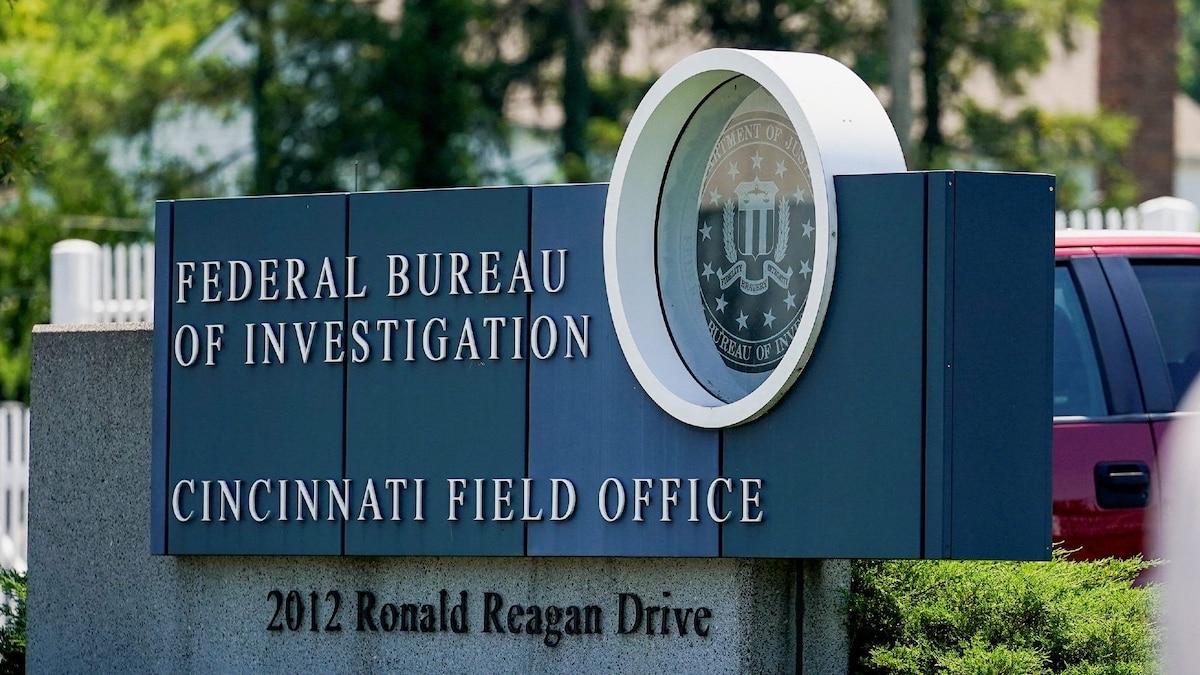
Photo: FBI field office (Reuters file photo via news18.com). Image is illustrative and does not depict the defendant or the case location.
Frequently Asked Questions
Who was sentenced in this case?
Zachary R. Jones, 39, of Johnston City, Illinois. He pleaded guilty to three counts of distribution of child pornography and was sentenced on October 20, 2026.
How long is the prison sentence?
Jones was sentenced to 121 months — just over 10 years — in federal prison, followed by 10 years of supervised release.
What did Jones admit to doing?
According to court documents, he admitted exchanging child sexual abuse material with others online in June and August 2025, and possessing nearly 70 videos and images.
How was Jones caught?
The investigation began with a cyber tip from the National Center for Missing & Exploited Children (NCMEC). Although he tried to hide his identity using a VPN and apps like Kik, federal investigators tracked him down.
Who prosecuted the case?
The case was prosecuted by Assistant U.S. Attorney David Sanders, with the investigation led by the FBI’s Springfield field office.
What is NCMEC?
The National Center for Missing & Exploited Children is a nonprofit that receives reports of suspected online child exploitation from technology companies and forwards them to law enforcement. It receives millions of reports each year.
Does a VPN really keep online offenders anonymous?
No. As U.S. Attorney Steven D. Weinhoeft stated in this case, “Federal agents have tools to defeat VPNs and apps like Kik that are designed to make offenders feel anonymous.”
Where can I report suspected online child exploitation?
In the U.S., reports can be made to the National Center for Missing & Exploited Children at missingkids.org, or to the FBI’s Internet Crime Complaint Center (IC3) at ic3.gov. For an emergency, contact local law enforcement or call 911.