A Worcester Superior Court jury deliberating the retrial of Noel Inoa told the judge Wednesday that it was deadlocked after a single day — but was ordered to keep trying to reach a verdict in the 14-year-old home-invasion murder case.
TL;DR: Jurors got the case around 12:40 p.m. Tuesday, Oct. 20, and by 2:30 p.m. Wednesday told Judge Daniel M. Wrenn they were deadlocked. Wrenn declined to give a formal deadlocked-jury instruction, saying they had not deliberated long enough, and sent them home to resume Thursday. It is the second time jurors have struggled with the case: Inoa’s 2019 trial also ended in a hung jury.
The Deadlock — and the Judge’s Answer
The jury received the case at about 12:40 p.m. on October 20 and deliberated until 4 p.m. without reaching a verdict. Around 2:30 p.m. on October 21, jurors sent a note to Judge Wrenn saying they were deadlocked and asking for guidance.
Wrenn, after consulting with lawyers for both sides, sent a note back telling jurors to continue deliberations. He said the jury had not been deliberating long enough to warrant a Tuey-Rodriguez instruction — the formal directive given to deadlocked juries in Massachusetts. He sent the panel home at 4 p.m. to return to deliberations on October 22.
If this jury ultimately cannot agree, it would be the second hung jury in the case: Inoa’s first trial in 2019 also deadlocked, after 26 hours of deliberations prompted then-Judge Janet Kenton-Walker to declare a mistrial.
The 14-Year-Old Case
Inoa, a former security guard, is accused of orchestrating a brutal home invasion in Worcester about 14 years ago in which a man was murdered, his wife was beaten nearly to death, and his daughter-in-law was left bleeding with a 10-inch knife in her neck.
Identification has been the central issue in both trials. Two survivors identified Inoa in photo arrays while hospitalized, but the defense argues they were too injured or medicated at the time for the identifications to be reliable — and alleges police conducted a poor, opaque investigation.
Prosecutors counter that location data from a “burner” prepaid cell phone links Inoa to the scene the night of the murder. The defense responds that the phone was not in Inoa’s name and the state has not proven it was his.
A Prosecutor’s Expletive — and a Denied Mistrial
Wednesday also brought courtroom drama over closing arguments. Defense lawyers asked Wrenn to declare a mistrial after Assistant District Attorney Brett Dillon used an expletive during his October 20 closing — saying “bull(expletive)” while criticizing aspersions the defense had cast. Wrenn had immediately ordered the word stricken from the record.
Out of the jury’s earshot on October 21, Inoa’s lawyers pressed for a mistrial. Wrenn declined, ruling the comment did not meet the legal standard.
“Profanity has no place in a superior court,” Wrenn said. “It’s crass, it shouldn’t have been said, but in the totality of the argument that was given, I did not view it to be an ad hominem attack on counsel.” He described the remark as an “inappropriate rhetorical flourish.”
What Happens Now
Deliberations resume Thursday, October 22. If the jury reaches a verdict, it ends a case that has lingered for a decade and a half. If it deadlocks again, prosecutors would face the question of whether to try Inoa a third time — or let the case go.
As with every criminal trial, Inoa is presumed innocent, and the state bears the burden of proving its case beyond a reasonable doubt.
FAQ
Who is Noel Inoa?
A former security guard accused of orchestrating a brutal home invasion in Worcester, Massachusetts, about 14 years ago, in which a man was murdered and two women were gravely injured. He is being retried in Worcester Superior Court.
What did the jury say on October 21?
After about a day of deliberations, the jury sent Judge Daniel M. Wrenn a note around 2:30 p.m. saying it was deadlocked and asking for guidance.
What did the judge do?
Wrenn told the jury to keep deliberating, ruling they had not deliberated long enough for a formal deadlocked-jury (Tuey-Rodriguez) instruction. He sent them home at 4 p.m. to resume deliberations October 22.
Has this case deadlocked before?
Yes. Inoa’s first trial in 2019 also ended in a hung jury after 26 hours of deliberations, resulting in a mistrial.
What is Inoa accused of?
Orchestrating a home invasion in which a man was murdered, his wife was beaten nearly to death, and his daughter-in-law was left with a 10-inch knife in her neck.
What is the key evidence dispute?
Identification. Two survivors identified Inoa in hospital photo arrays; the defense says they were too injured or medicated to be reliable. Prosecutors cite burner-phone location data placing Inoa at the scene; the defense notes the phone was not in his name.
Why did the defense seek a mistrial?
Because prosecutor Brett Dillon used an expletive (“bull[expletive]”) during his October 20 closing argument. The judge had the word stricken from the record and, on October 21, denied the mistrial request, calling the remark “crass” but not an attack on counsel.
What happens if the jury deadlocks again?
The judge could declare a second mistrial, and prosecutors would have to decide whether to try Inoa a third time or drop the case.
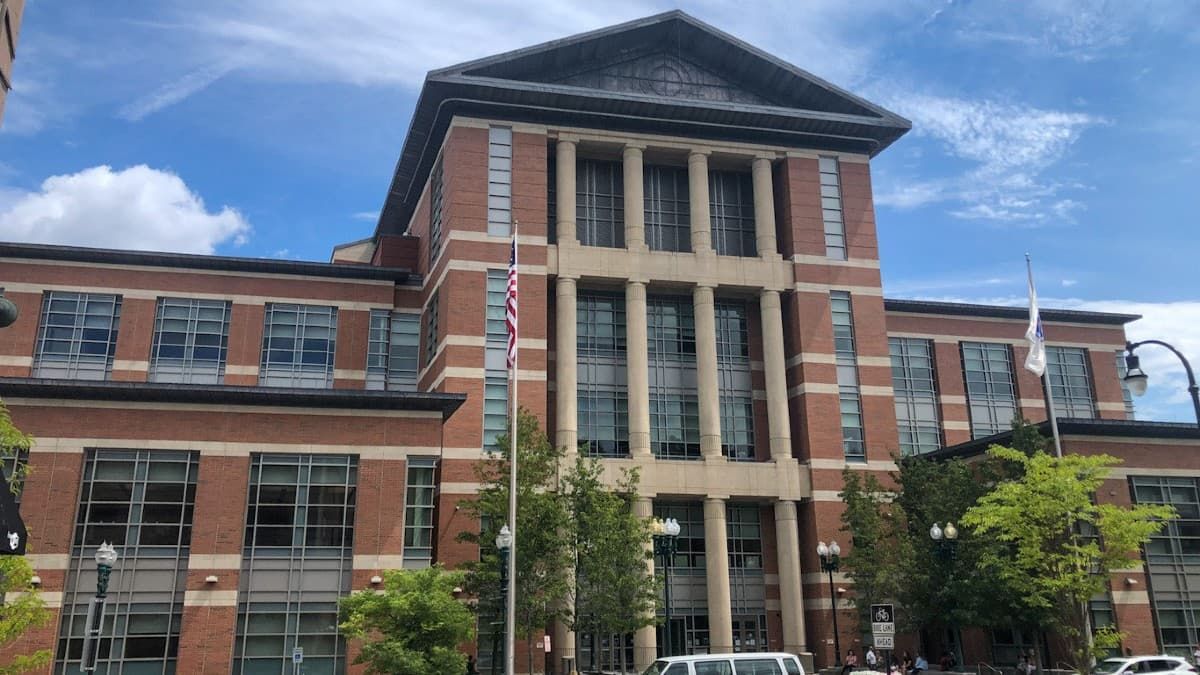
Featured image: The Worcester County Courthouse in Massachusetts, home to Worcester Superior Court. Photo: sociuslawfirm.com. Sources: Worcester Telegram & Gazette.