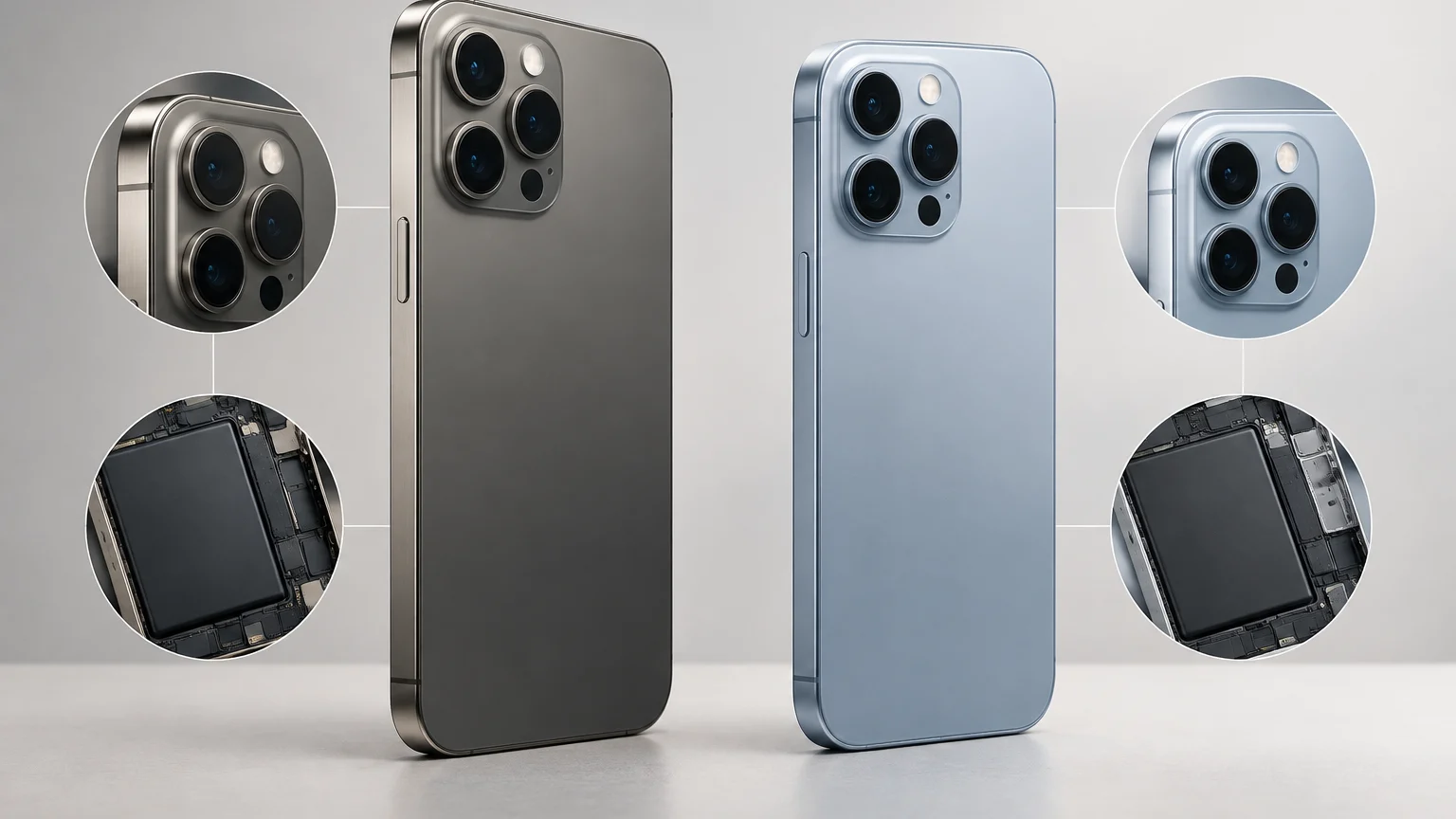
Two years is a long time in smartphone terms, and the gap between the iPhone 16 Pro and the freshly released iPhone 18 Pro shows it. The newer phone starts at $1,199 with 256GB of storage, up from the $999 and 128GB baseline the 16 Pro launched with back in 2024. That’s a $200 price hike, though Apple did double the entry-level storage to soften the blow.
For anyone still holding a 16 Pro, the case for upgrading is a lot stronger than it would be for someone coming from last year’s 17 Pro. The differences pile up fast, starting with battery life. Apple now rates the 18 Pro for 36 hours of video playback, compared to 27 hours on the 16 Pro. The Max models see an even bigger jump, from 33 hours up to 45. Charging has sped up too — getting to 50% battery now takes around 15 minutes, half the 30 minutes it used to take on the older phone.
The screen has changed as well. Outdoor brightness now peaks at 3,000 nits, a claimed 50% improvement, and there’s finally an anti-reflective coating that the 2024 model never had. The titanium frame and glass back of the 16 Pro are also gone — Apple switched to an aluminum unibody design paired with Ceramic Shield 2 starting with the 17 Pro generation.
Photography is where the two phones diverge the most. The 16 Pro’s telephoto camera topped out at 12 megapixels with 5x optical zoom. The 18 Pro jumps to 48 megapixels and offers both 4x and 8x optical options. The front camera has also grown, from 12 to 18 megapixels, and now supports Center Stage along with a steadier video mode. Perhaps the biggest photographic shift is the main camera’s variable aperture, which ranges from ƒ/1.48 to ƒ/4.0 across four settings, replacing the fixed ƒ/1.78 aperture of the older model. Apple has thrown in ProRes RAW, Genlock, Dual Capture, 60fps Cinematic mode and full manual Pro controls to go with it.
Under the hood, the new A20 Pro chip is built on a 2nm process and adds a seventh GPU core with Neural Accelerators built in. The Neural Engine now has 32 cores, double what the 16 Pro offered, and reports suggest there’s 4GB more RAM as well. A second-generation vapor chamber — something the 16 Pro simply didn’t have — helps keep things cool during heavy gaming, long video shoots, or on-device Apple Intelligence tasks.
Here’s the catch, though: most of these upgrades — the aluminum body, Ceramic Shield 2, the vapor chamber, the new telephoto lens, the battery gains — actually arrived a year earlier with the iPhone 17 Pro. So a discounted 17 Pro from a third-party retailer might get you nearly all of the same benefits for less money. Compared to the 17 Pro, what the 18 Pro really adds is the variable aperture with pro-level photo controls, a new C2 modem, a slightly smaller Dynamic Island, and roughly three extra hours of battery life. If none of that feels essential, the 17 Pro arguably offers better value.
Weight is worth a mention too — the 18 Pro Max is 22 grams heavier than the 16 Pro Max, though it also gets the largest battery boost of the two sizes and can now be configured with up to 2TB of storage.
Since Apple no longer sells the 16 Pro directly, this comparison really only matters to current owners or shoppers hunting leftover retailer stock. For them, the upgrade case rests mainly on battery life, faster charging, the camera overhaul, and the internal improvements. Preorders for the iPhone 18 Pro opened Saturday, September 12, 2026, with the phone hitting shelves on Friday, September 18.