TL;DR: A suburban Chicago man has been sentenced to two years in federal prison for organising hundreds of staged armed robberies so the fake victims could fraudulently apply for U-visas reserved for crime victims.
A suburban Chicago man has been sentenced to two years in federal prison for conspiring to stage armed robberies so that the purported victims could apply for U.S. immigration visas reserved for crime victims, federal prosecutors announced. Parth Nayi, 29, of Woodridge, Illinois, was sentenced by U.S. District Judge Mary M. Rowland and fined $50,000.
From 2022 to 2024, Nayi organised and participated in hundreds of staged armed robberies at coffee shops, restaurants, liquor stores and gas stations across the country, including in Chicago and the suburbs of Lombard, Elmwood Park, St. Charles, Hickory Hills, River Grove, Lake Villa and South Holland, prosecutors said.
Nayi pleaded guilty earlier this year to conspiracy to commit visa fraud. Five other individuals have also been convicted as part of the federal investigation, prosecutors said.
How the staged-robbery scheme worked
Nayi worked with others to recruit fake victims, pay off store owners to use their locations, coordinate and pay fake robbers, and coach the bogus victims through the plan, according to the U.S. Attorney’s Office. During the staged robberies, people acting as robbers brandished what appeared to be firearms, approached the purported victims and demanded money.
Afterwards, the purported victims submitted forms to local law enforcement to obtain certification that they were victims of a qualifying crime and were helpful in the investigation. With that certification in hand, they submitted fraudulent U-visa applications to U.S. Citizenship and Immigration Services based on their alleged status as robbery victims.
Thousands of fake victims, thousands of dollars each
Thousands of individuals who posed as victims each paid Nayi $5,000 to $30,000 to participate in the scam, prosecutors said. At those prices, even a fraction of the staged robberies would have generated substantial income for the organisers, while each fake application also consumed law enforcement and immigration resources.
Prosecutors argued in a sentencing memorandum that Nayi was the main organiser and at the centre of almost every single one of the hundreds of staged robberies. Assistant U.S. Attorney Saqib Mohammad Hussain said Nayi significantly corrupted the federal U-visa programme, which is designed to benefit a particularly vulnerable group: foreign nationals who are victims of serious crimes while visiting the United States.
A sentence longer than prosecutors recommended
Judge Rowland sentenced Nayi to two years in prison, a year longer than the term recommended by prosecutors, according to an Associated Press report on the sentencing. Nayi’s attorney had asked for probation. The judge also fined him $50,000.
The longer sentence signals how seriously the court viewed the corruption of a programme meant for genuine crime victims. Staged crimes do more than defraud an agency: they generate false police reports, waste investigative time and, if undetected, can divert a benefit meant for people who truly suffered.
What a U-visa is, and why the fraud matters
U nonimmigrant status, commonly called a U-visa, is set aside for foreign nationals who are victims of certain crimes and who are helpful to law enforcement in the investigation or prosecution of that crime. It is meant to encourage victims, including people without legal status, to report crime without fear.
A scheme that manufactures victims undermines that purpose in two ways: it floods the system with false claims, and it risks making genuine victims’ claims harder to believe. That is why federal prosecutors pursued the case as a conspiracy reaching across states and involving hundreds of staged incidents, not as a single local fraud.
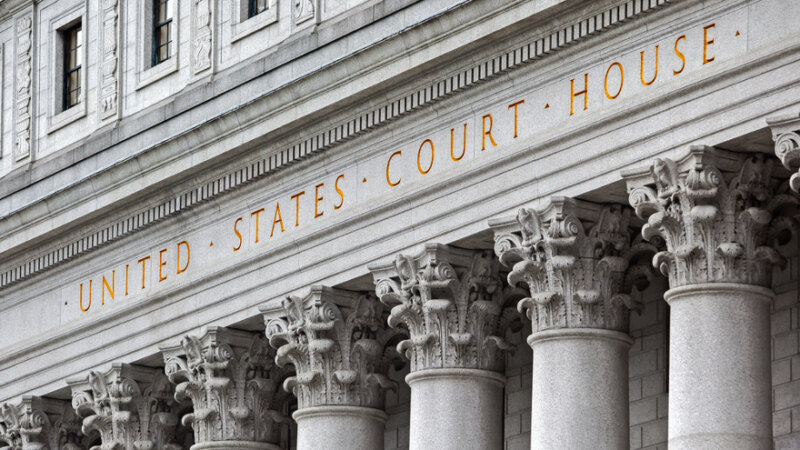
Featured image: representative scene photo, not a photo of the people or the exact location in this case. Image source: courthouse photo
Sources: U.S. Department of Justice, Northern District of Illinois and FOX 32 Chicago.
Frequently Asked Questions
Who was sentenced in the staged-robbery visa case?
Parth Nayi, 29, of Woodridge, Illinois.
What was his sentence?
Two years in federal prison and a $50,000 fine, imposed by U.S. District Judge Mary M. Rowland.
What did he plead guilty to?
Conspiracy to commit visa fraud.
How did the scheme work?
Nayi staged armed robberies with fake robbers and fake victims, who then used police certification of the fake crime to apply for U-visas.
How much did fake victims pay?
Each paid Nayi $5,000 to $30,000 to participate, according to prosecutors.
Where did the staged robberies happen?
At coffee shops, restaurants, liquor stores and gas stations across the country, including Chicago-area suburbs such as Lombard, Elmwood Park and St. Charles.
What is a U-visa?
A visa set aside for foreign nationals who are victims of certain crimes and who help law enforcement investigate or prosecute the crime.
Were others convicted?
Yes. Five other individuals have been convicted as part of the federal investigation, prosecutors said.